News
Retaining nurses can substantially reduce future shortages
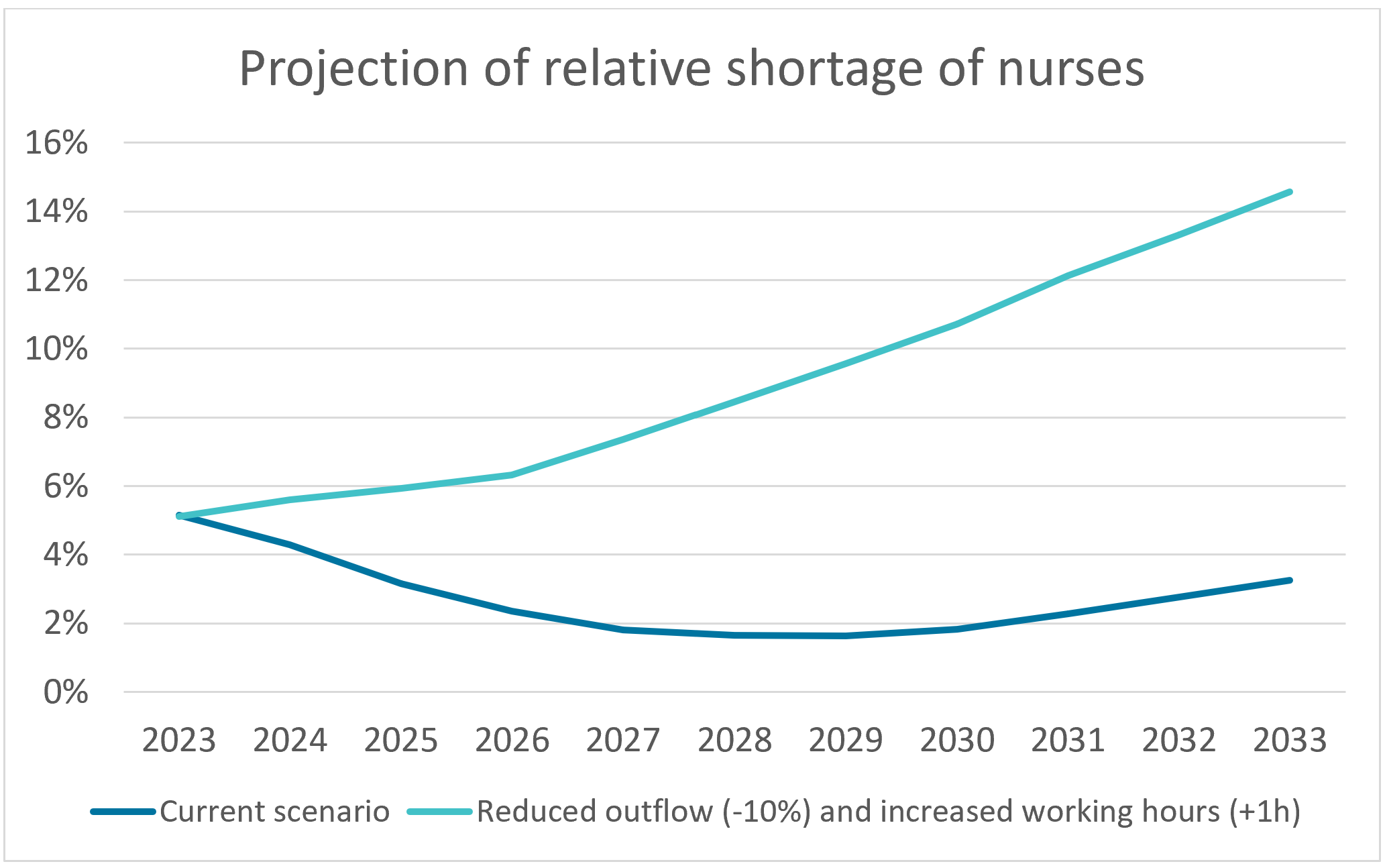
Retaining nurses and encouraging them to work slightly more hours could substantially reduce the projected nursing shortage in the Netherlands. If current trends continue, the nursing shortage could increase from 5.7% in 2023 to 14.6% by 2033. Combining a 10% reduction in outflow with an increase of 1 working hour per week could reduce the shortages to 3.2% in 2033. This is shown by research from Nivel, based on projections of future supply and demand for registered nurses. The findings are important for policymakers, healthcare organisations and nursing professionals, as they show that recruitment alone will not be sufficient to address the growing shortage.
Retention is key
The scenario that had the greatest impact combined a 20% reduction in nurses leaving the profession with an increase of 1.5 working hours per week. In this scenario, the projected shortage in 2033 could be reduced to 1.4%. These results underline the importance of retaining nurses and supporting sustainable careers in nursing.
A combination of measures is needed
None of the individual strategies assessed would completely eliminate the projected shortage. In addition to retaining nurses and increasing working hours, reducing demand for healthcare will also be necessary to bring supply and demand into balance. This is a more complex challenge that requires broader changes in healthcare provision.
Fragment from Identifying strategies to reduce the shortage of Dutch registered nurses; analysis of prognostic data from a national database: Projection of the relative shortages of registered nurses in the Netherlands over 10 years as a percentage of the total demand, based on the baseline (current) scenario, and a scenario with reduced outflow and increased working hours.
The future of the nursing workforce is not only about attracting more nurses, but also about retaining the nurses we already have. Supporting nurses to remain sustainably employable and stay in the profession should therefore be a priority
Art van Schaaijk, PhD
Senior Researcher Professions in Healthcare and Manpower Planning
Want to know more?
View all the results of the Nivel study in the publication.
About this study
The study uses data from the Dutch Labour Market Monitor for Health and Welfare (AZW) and its associated forecasting model. Using this model, different scenarios were developed to assess future shortages of registered nurses. Four modifiable factors were examined: the number of hours worked, sickness absence, entry into the nursing profession, and exit from the profession. The scenarios were based on realistic changes in these factors and show which strategies could contribute most to reducing future workforce shortages.